


Lobe Pump
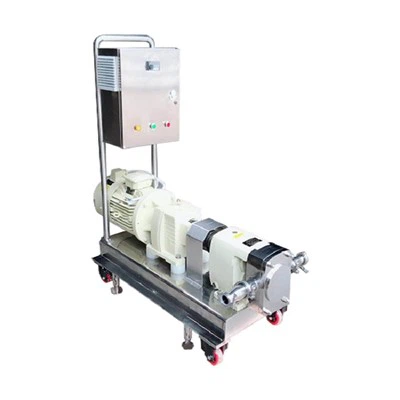
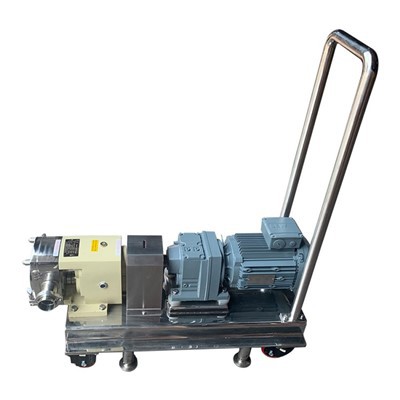
Lobe pumps are equipment that enables the transfer of high viscosity and granular structured fluids. Made of stainless steel, these pumps are resistant to corrosion. Thanks to these features, it is suitable for use in the food and chemical industries. Providing high efficiency and hygiene, lobe pumps are one of the indispensable equipment of industrial areas today.
Benefits of Lobe Pump
Versatility
Lobe pumps can handle a broad spectrum of liquids, including those with high viscosity and solids content. This versatility makes them ideal for industries such as food processing, pharmaceuticals, and wastewater treatment.
Gentle Product Handling
The non-contacting lobes of these pumps ensure gentle product handling, making them suitable for shear-sensitive fluids. This is especially critical in the food and beverage industry, where product quality is paramount.
Self-Priming
Lobe pumps are typically self-priming, meaning they can evacuate air from the suction line and create a strong vacuum. This feature reduces the risk of cavitation and ensures efficient operation.
High Efficiency
Their positive displacement design leads to consistent flow rates, which can be crucial in processes where precision is essential. Additionally, lobe pumps are known for their energy efficiency.
Ease of Maintenance
These pumps are relatively easy to maintain due to their simple design and minimal moving parts. This results in reduced downtime and lower maintenance costs.



Why Choose Us
Rich experience
Has a long-standing reputation in the industry, which makes it stand out from its competitors. With over many years of experience, they have developed the skills necessary to meet their clients' needs.
Efficient and convenient
The company has established marketing networks around the world to provide high-quality services to customers in an efficient and convenient manner.
Advanced equipment
We take great measures to ensure that we work with the industry' s highest quality equipment and that our equipment is regularly and meticulously maintained.
Professional team
We have a team of skilled and experienced professionals who are well-versed in the latest technology and industry standards. Our team is dedicated to ensuring that our customers get the best service and support possible.
Competitive prices
We offer our products at competitive prices, making them affordable for our customers. We believe that high-quality products should not come at a premium, and we strive to make our products accessible to all.
Quality assurance
In terms of quality assurance, the company strictly follows the standards and norms of the industry quality system. Adopt industry-leading testing equipment to ensure product quality and good reputation.
Lobe pumps are similar to external gear pumps in operation, except the pumping elements or lobes do not make contact. Lobe contact is prevented by external timing gears producing a continuous (non-pulsating) discharge.
Pump shaft support bearings are located in the timing gear case. Since the bearings are out of the pumped liquid, pressure is limited by bearing location and shaft deflection. There is not metal-to-metal contact and wear in abrasive applications is minimal. Use of multiple mechanical seals makes seal construction important.
Lobe pumps are frequently used in food applications, because they handle solids without damaging the pump or the product. Lobe pumps can pump much larger particles than can other positive displacement pumps.
Since the lobes do not make contact, and clearances are not as close as in other PD pumps, this design handles low viscosity liquids with diminished performance. Loading characteristics are not as good as other designs, and suction ability is low. High-viscosity liquids require considerably reduced speeds to achieve satisfactory performance.
Lobe pumps are cleaned by circulating a fluid through them. Cleaning is important when the product cannot remain in the pumps for sanitary reasons or when products of different colors or properties are batched.

Our lobe pumps are versatile and reliable solutions in handling viscous fluids. Some of the applications include:
Confectionary industry
Within candy production, our Packo lobe pumps excel due to their efficiency when handling highly viscous fluids.
Food and beverage
Lobe pumps are used for transferring a variety of food products, including those with high viscosity or containing large particulates. They are gentle on the product, maintaining its integrity during the transfer process.
Pharmaceutical applications
The hygienic and sanitary design of lobe pumps makes them ideal for pharmaceutical applications, where sterility and cleanliness are paramount.
Chemical industry
Lobe pumps are used in wastewater treatment plants for sludge transfer due to their ability to handle solids and abrasive materials.
Lobe pumps are chosen due to the low speeds they can be operated at between 20-1200rpm ensuring liquids are handled in a gentle slow-motion preventing their consistency from being changed. They handle between 1cst and 55,000 CST, and produce flows up to 300M³H, while handling liquids up to 150°C.
Lobes can be manufactured from Stainless Steel AISI316 which are hygienic rated and of sanitary design, but can also be rubber for use in industrial applications. Rubber Lobed pumps are self priming up to 6M as the rubber parts create an airtight seal, which is not possible with Metallic lobes. Metallic & Rubber lobes can be in tri (Y) or twin (I) lobed design, with all materials being able to operate in reverse.
The pump is sealed via a mechanical seal, double mechanical seal, packed gland or lipped seal. Heating Jackets can be fitted to ensure stable liquid temperature, and a bypass valve can be fitted on the front cover or externally to help prevent overpressurisation. Lobe pumps can be operated in both directions but a relief valve will only operate in one direction.
Units can be made suitable for dry running providing a lubricated seal system to the shaft seal preventing overheating.
This design of pump are easy to maintain given the front casing design. The casing can be opened easily through the undoing of four bolts, and inner parts and seals can be replaced within minutes. A seperate chamber between the gearbox and pump housing ensures should a seal failure occur in either the pump or gearbox that the two liquids do not interact.
Pump heads can contain wear plates to prevent the accelerated wear of the pump casing during the handling of solid laden sludges, or hard particles and which also enable low cost overhaul. This ensures cost effective maintenance of the unit throughout its life.
Applications include the handling of viscous liquids, which can contain solids up to 50mm, and gas slugs such as for the transferring of waste water sludge containing high percentages of dry solids.
● Lobe pump has strong self-priming ability, and centrifugal pump must be filled with liquid before rotating.
● The lobe pump is a positive displacement pump, and the conveying flow can be controlled more accurately, and it can also be easily made into a variable pump. The output flow of the centrifugal pump cannot be controlled, and it decreases with the increase of its own resistance.
● Lobe pump can be easily made into varieties with higher output pressure, such as 15kg / cm2, which is suitable for long-distance or high-resistance quantitative conveying.
●The rotation speed of the lobe pump is very low, generally between 120rmp and 600rmp, and the conveyed material is output smoothly without its components being damaged. The speed of the centrifugal pump is very high, and the material being conveyed is subject to strong impact and centrifugal force. Therefore, the centrifugal pump often produces different materials when the mixture is conveyed, which causes the quality of the finished product to decline. This lobe pump is the best choice to solve this problem, so it is especially suitable for conveying mixtures and even materials containing solid particles.
● Lobe pump optimized lobe profile design, stable pulsation, minimal error, small vibration and high efficiency, which is the biggest difference between it and centrifugal pump.
● Lobe pump can be used to transport substances with very high viscosity, so it is also called colloidal pump. Centrifugal pumps do not have this feature.

Single Lobe Pump
The single lobe pump, also known as a single rotor pump, features a single lobe that rotates within a chamber, creating suction and discharge pressure. This type of pump is ideal for low-to-medium viscosity fluids and is commonly used in applications such as food processing, wastewater treatment, and chemical transfer.
Bi-Wing Lobe Pump
The bi-wing lobe pump, as the name suggests, consists of two lobes with a shape resembling wings. These lobes rotate in opposite directions, creating a smooth flow of fluid. Bi-wing lobe pumps excel in handling viscous fluids with suspended solids and are widely used in industries like oil and gas, mining, and wastewater management.
Tri-Lobe Pump
Tri-lobe pumps, also referred to as three-lobed pumps, feature three lobes that rotate within a casing. This design ensures consistent and pulsation-free flow, making it suitable for delicate or shear-sensitive fluids. Tri-lobe pumps are commonly used in applications such as pharmaceutical manufacturing, cosmetics production, and dairy processing.
Multi-Lobe Pump
Multi-lobe pumps come in various configurations, including four, five, or even more lobes. These pumps offer enhanced performance, increased efficiency, and reduced pulsation compared to single or tri-lobe pumps. They are widely used in industries that require precise and continuous fluid transfer, such as petrochemical, paper and pulp, and industrial processing.
Components Of A Lobe Pump
Lobes
The basic function of the lobe is to create a chamber for fluid movement, ensuring efficient transfer. Lobes are generally made of stainless steel or other durable materials for longevity.
Casing
Casing surrounds the lobes and fluid chamber, providing a sealed environment. Casings are built to withstand pressure and resist corrosion, ensuring durability.
Shafts
The shaft connects lobes with the main drive mechanism. Ensure synchronized movement of the rotors for smooth operation.
Seals
Seals are used to prevent fluid leakage and maintain efficiency. Mostly include mechanical seals and O-rings, chosen based on application needs.
Bearings
Bearings hold the shafts in place and maintain rotor alignment. One of the major functions of bearings is reducing friction and wear, prolonging the pump’s life.
Timing Gears
Timing gears ensure precise timing of the lobes, preventing them from touching. Maintain smooth operation and avoid damage to the rotors.
Pressure and flow of the Flushing/Quench System (if present)
Whilst your Lobe Pump is in operation, you need to be regularly checking the pressure and flow of the Flushing/Quench system of your pump. For pressure-less shaft seal types M2, M5, O2 or O4, the Quench System requires a pressure of 0.5 mwc and a capacity of 0.25 l/min. For pressurised shaft seal types M2 or M5, the Flushing System requires a pressure of 2 bar higher than the system pressure.
The temperature of the Heating System (if present)
It’s important to check that the heating system temperature of your Lobe Pump is correct. The heating system is there to maintain the temperature, therefore the viscosity of the product you are processing and the pump has been sized around a set viscosity point. If the viscosity of the product rises above this value then the capacity of the pump will likely drop due to the increased pressure requirement placed on the pump.
Oil level
You should be checking the oil level of your Lobe Pump. If the oil level has reduced, check your pump for oil leakage. We recommend checking the oil level on a fairly regular basis to avoid unnecessary damage to the bearings.
Pressure
Check the pressure of your Lobe Pump at the suction and delivery side to ensure that they are within the anticipated and specified system levels. Changes to these can have a detrimental effect on the pump’s performance and health. Insufficient suction pressure can result in cavitation and irreparable damage to the rotors, seals and possibly pump casing. A drop in pump pressure could be an indication of air entering the system, insufficient static head, an obstruction in the discharge pipework, worn out bearings or gears, pump operating in by-pass, pump operating speed being too low or the product temperature being too high.
Changing the oil in a Lobe Pump
It is important to ensure you are changing the oil in the gearbox of your Lobe Pump. If being used consistently we would recommend changing the oil after 300 operating hours, following initial commissioning/every 3000 operating hours or at least every 3 months. If not being used regularly, we would recommend every 2000 operating hours or at least every 3 months.
Our Factory
Unique Process Technologies is a machinery company located in Wenzhou, China that specialized in industry mixing machines, pumps and fitting valves. Such as mixing tank, lab type mixing machine, centrifugal pumps, screw pumps and lobe pumps for the Dairy, Food, Pharmaceutical, Beverage, and Biotechnology industries.


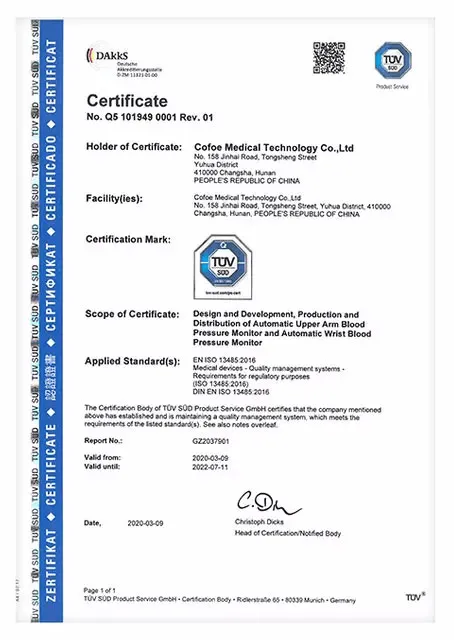
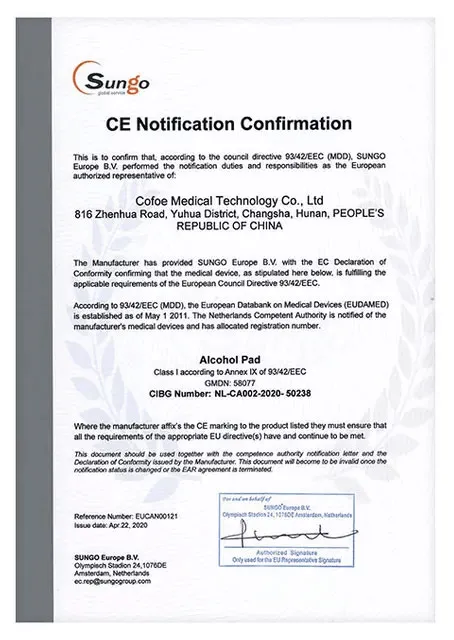
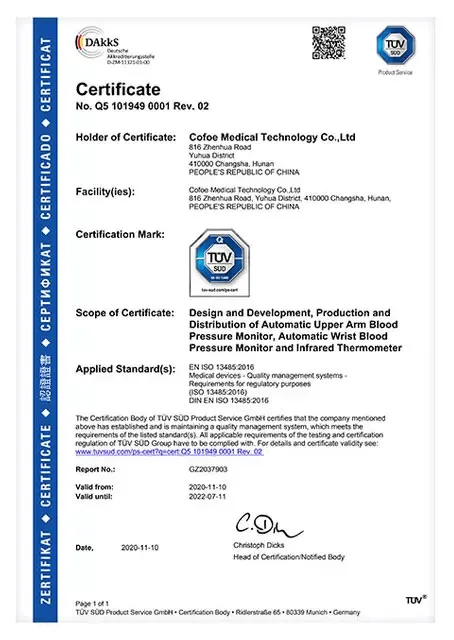
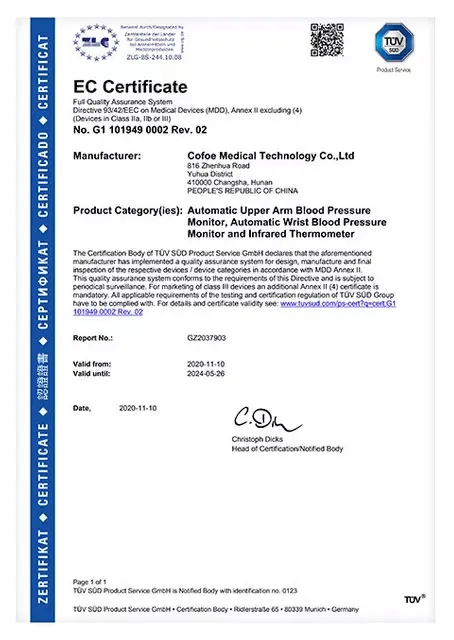
Certifications
FAQ
We're professional lobe pump manufacturers and suppliers in China, specialized in providing high quality customized service. We warmly welcome you to buy discount lobe pump from our factory. For free sample, contact us now.
Tri Lobe Rotary Lobe Pump, Food Grade Fruit Pulp Rotary Lobe Pump, Sanitary Positive Displacement Rotary Lobe Pump